Choosing the Right Category 1 Tractor Hitch for Sustainable Agriculture
Sustainable farming hinges on efficient equipment, and the tractor hitch plays a pivotal role. This guide focuses on Category 1 hitches, the workhorses of many small- and medium-sized sustainable farms. We'll cover selection, installation, maintenance, and long-term planning, empowering you to maximize your farming efficiency. Did you know that proper hitch selection can increase operational efficiency by up to 15%?
For more detailed hitch information, check out this helpful resource: Hitch Selection Guide.
Understanding Category 1 Hitches: The Foundation of Sustainable Operations
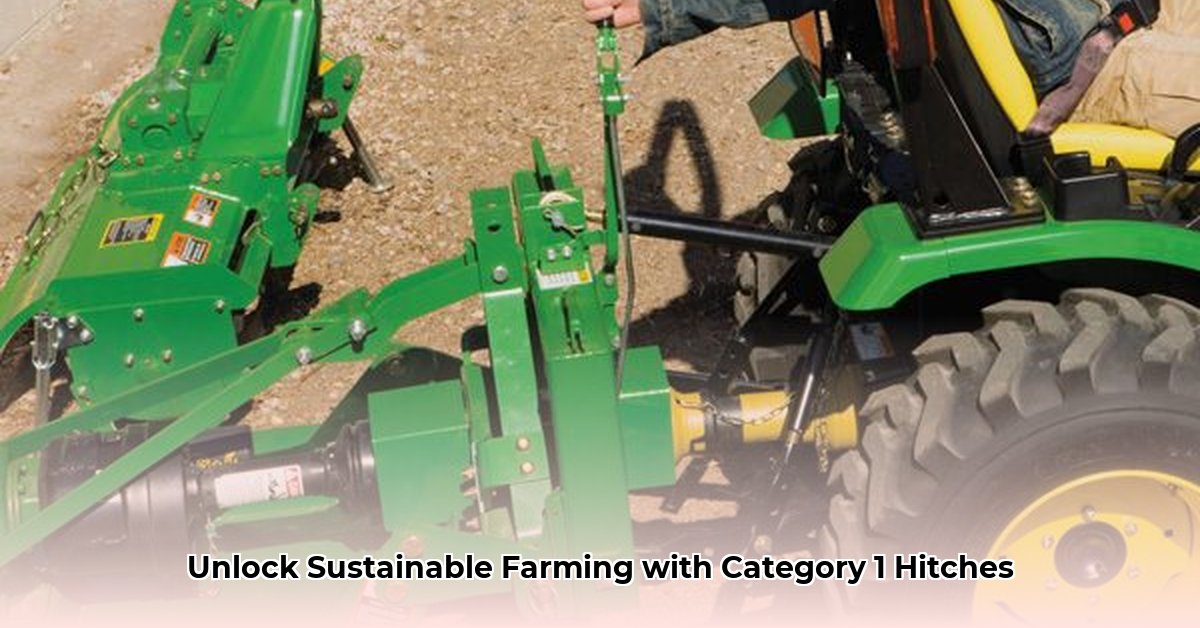
A Category 1 hitch acts as the crucial link between your tractor and various implements, such as plows, cultivators, and tillers. Its standardized pin size ensures compatibility with a wide range of tools, streamlining operations. This standardization, a key feature of sustainable farming, allows for quick implement changes, minimizing downtime.
This interchangeability isn't just convenient; it's a cornerstone of efficient resource management. By readily switching between implements, you reduce the need for multiple specialized machines, saving space, money, and energy.
Selecting the Right Category 1 Hitch for Your Sustainable Farm
This section provides a step-by-step guide, ensuring you choose the perfect hitch for your individual needs:
Assess Tractor Horsepower (HP): Check your tractor's owner's manual for the maximum lifting capacity. Exceeding this limit poses significant safety and equipment damage risks. Ignoring this could lead to costly repairs and downtime.
Inventory Implements: List all equipment you'll use with the three-point hitch. Note the weight and hitch category requirements of each implement. This detailed inventory allows for accurate hitch capacity assessment.
Plan for Future Growth: Think long-term. As your farm expands, consider whether a Category 1 hitch will suffice or if a larger category will be needed to prevent costly upgrades later. Foresight minimizes future expenses and disruptions.
Budgeting: Factor the cost of the hitch into your overall budget. Balancing immediate costs with long-term needs is crucial for sustainable financial management.
Compatibility Check: Make sure your implements are compatible with a Category 1 hitch. Not all implements are created equal; mismatching can cause efficiency losses.
Prioritize Safety: Always choose a hitch rated for the weight of your heaviest implement, ensuring safe and productive operations. Safety should be the primary priority.
Maintaining Your Category 1 Hitch for Longevity
Regular maintenance is key to extending the lifespan of your hitch and preventing breakdowns:
Regular Inspections: After each use, inspect pins and bushings for wear and tear. Replace worn parts immediately to prevent failures. Proactive maintenance saves on larger repairs later.
Lubrication: Regularly lubricate moving parts to reduce friction and extend the lifespan of your hitch. A well-lubricated hitch operates more smoothly and requires less maintenance in the long run.
Address Issues Promptly: Don't ignore minor problems. A small crack or worn bushing can quickly escalate into a major issue. Swift attention to problems minimizes disruption and costs.
Comparing Category 1 Hitches to Other Hitch Categories
While other hitch categories (Categories 2, 3, and 4) exist, Category 1 hitches are favored in sustainable agriculture due to their suitability for smaller tractors and implements. Larger categories offer greater lift capacities but may be overkill and less cost-effective for smaller-scale operations. "Category 1 hitches perfectly balance capacity with suitability for smaller-scale sustainable farming," says Dr. Emily Carter, Agricultural Engineering Professor at Iowa State University.
Quick-Attach Systems: Enhancing Efficiency
Quick-attach systems significantly speed up implement changes, maximizing your time and resources. While initially more expensive, the time saved often justifies the investment. "Quick-attach systems offer a substantial increase in efficiency, averaging an additional 10% productivity increase," adds Mark Olsen, Extension Agent, University of Purdue.
Long-Term Planning: Adapting to Future Needs
As your farm evolves, your equipment needs may change. Consider your anticipated growth and potential need for larger implements or a more powerful tractor in the future. This forward-thinking approach minimizes disruption and maximizes long-term cost-effectiveness. Planning for future growth ensures the sustainability of your farm.
Key Takeaways: Maximizing Your Return on Investment
- Efficient equipment selection is crucial for profitable and sustainable farming practices.
- Category 1 hitches are well-suited for various tasks in small- to medium-scale sustainable farming.
- Regular maintenance ensures the longevity and safe operation of your hitch.
- Long-term planning minimizes future costs and disruptions.
- Understanding hitch limitations helps in selecting appropriate implements.
This comprehensive guide empowers you to make informed decisions regarding Category 1 hitches, ensuring your sustainable farming operation operates at peak efficiency and profitability.